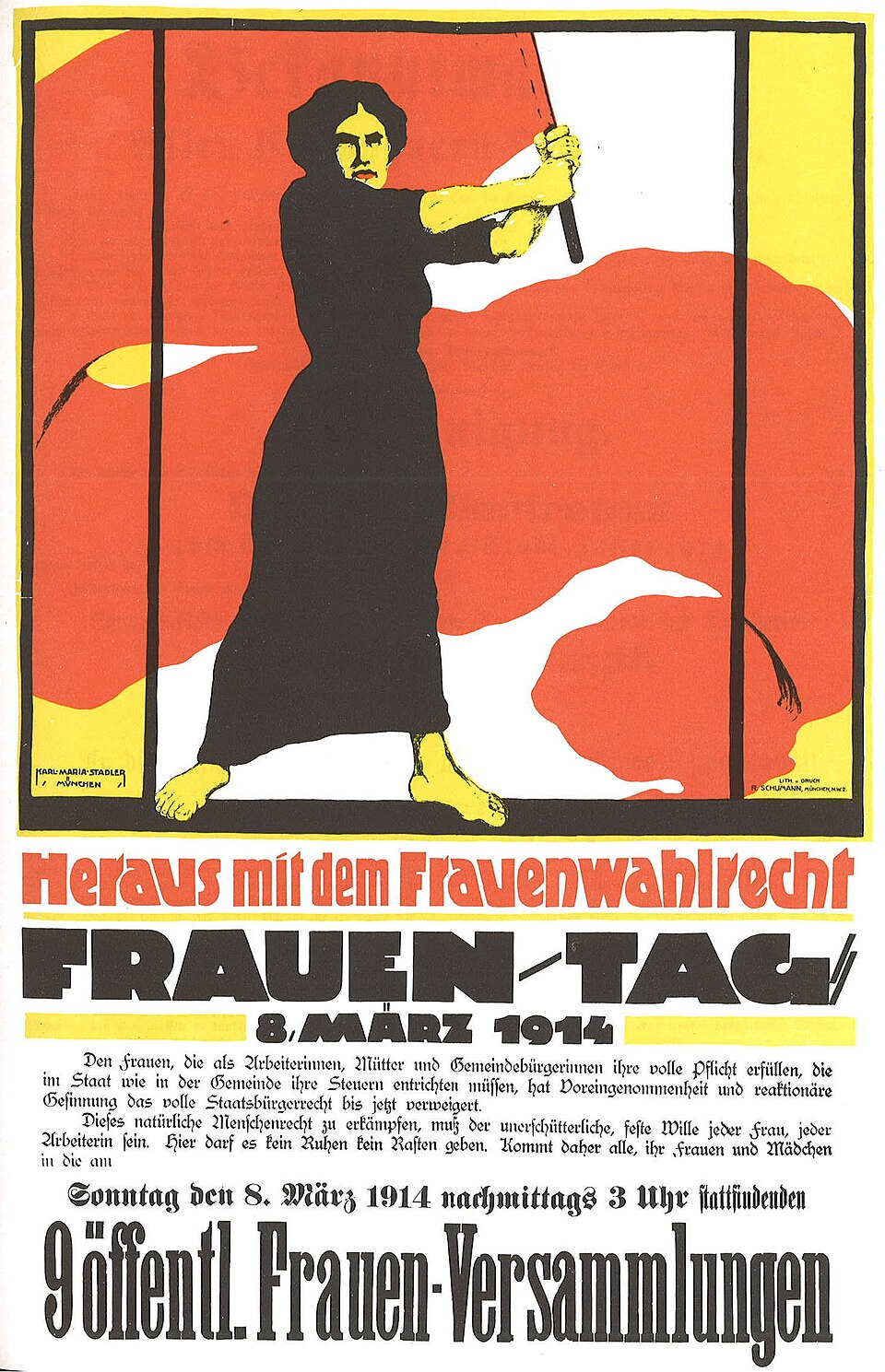
Unpacking International Women's Day's True Origins: Why March 8th?
Every year, March 8th marks a significant global observance, prompting millions to reflect on progress made towards gender equality, celebrate women's achievements, and rally for change. But for many, the question lingers: Is Today International Women's Day? And if so, what are the profound historical roots that cemented this particular date as a beacon for women's rights worldwide? Far from being a modern invention, International Women's Day (IWD) boasts a rich, complex history deeply intertwined with labor movements, socialist politics, and global calls for peace and justice. This article delves into the true origins of IWD, exploring its evolution from early 20th-century activism to a universally recognized day.
The Seeds of a Movement: Early 20th Century Activism
The concept of a dedicated day for women's rights didn't simply materialize; it germinated from the fervent social and political landscapes of the early 20th century, particularly in the United States. Women, often relegated to demanding and poorly compensated jobs, were beginning to organize and demand better. The catalyst for what would become International Women's Day can be traced back to the garment factories of New York City.
On Is Today International Women's Day? Discover Its Rich History begins with a pivotal moment: February 28, 1908. An estimated 15,000 women, predominantly garment workers, marched through the streets of New York. Their demands were clear and radical for the time: shorter working hours, better pay, and the right to vote. These women faced grueling conditions, long shifts, and meager wages, yet their courage in the face of adversity ignited a spark. As activist and author Charlotte Perkins Gilman reportedly told the crowd, "It is true that a woman’s duty is centered in her home and motherhood... [but] home should mean the whole country, and not be confined to three or four rooms or a city or a state." This sentiment encapsulated the growing awareness that women's struggle for rights extended far beyond the domestic sphere.
Inspired by this powerful demonstration, the Socialist Party of America designated the last Sunday in February as National Woman's Day, first observed on February 28, 1909. This American initiative laid the foundational groundwork, but the movement was soon to transcend national borders.
From National Day to Global Call: The European Catalyst
While the initial idea for a women's day originated in the U.S., it was a visionary German feminist and socialist, Clara Zetkin, who championed the idea of an international commemoration. In 1910, during the second International Conference of Socialist Women held in Copenhagen, Zetkin proposed the establishment of an International Women's Day. Her proposal, supported by over 100 women from 17 countries, aimed to unite women globally in their fight for suffrage, labor rights, and an end to discrimination.
The following year, on March 19, 1911, the first International Women's Day was marked across Europe, with events and demonstrations held in Austria, Denmark, Germany, and Switzerland. Hundreds of thousands of women and men rallied, demanding the right to vote and to hold public office, an end to sex discrimination in employment, and improved working conditions. The date itself was chosen to commemorate the day in 1848 when the Prussian king promised – but then later withdrew – the right to vote for women.
As the world plunged into World War I from 1914 to 1918, International Women's Day took on an even more profound significance. Women across Europe used the occasion not only to advocate for their rights but also to protest the devastating armed conflict, calling for peace and solidarity in a world torn apart by war.
The March 8th Turning Point: Russia's Pivotal Role
The specific date of March 8th, now synonymous with International Women's Day, was solidified by a monumental event in Russia. In the midst of World War I, on February 23, 1917, according to the Julian calendar then used in Russia, thousands of women textile workers in Petrograd (now St. Petersburg) went on strike. They demanded "Bread and Peace," protesting severe food shortages, the ongoing war, and the repressive Tsarist regime.
This massive demonstration on what was a Sunday for them quickly escalated, spreading throughout the city and attracting factory workers, students, and soldiers. It effectively served as the opening salvo of the Russian Revolution, ultimately leading to the abdication of Tsar Nicholas II days later and profoundly reshaping Russian history. The provisional government that took power granted women the right to vote.
When this date is converted to the Gregorian calendar, which is widely used today, February 23, 1917, falls on March 8th. This powerful act of women's collective action, demonstrating their critical role in historical change, cemented March 8th as the enduring date for International Women's Day. It was a day born from the courage of ordinary women demanding fundamental rights and an end to suffering.
A United Nations Recognition and Evolving Purpose
For decades following the Russian Revolution, International Women's Day continued to be celebrated, particularly in socialist countries. However, its global recognition expanded significantly in the latter half of the 20th century. The United Nations began commemorating the holiday in 1975, which was designated "International Women's Year." Two years later, in 1977, the UN General Assembly officially recognized March 8th as the United Nations Day for Women's Rights and International Peace, solidifying its place on the international calendar.
Today, IWD serves a dual purpose: it is both a celebration of the economic, social, cultural, and political achievements of women, and a powerful call to action. Across the globe, observances vary widely, reflecting local contexts and priorities. In more than 20 countries, including Afghanistan, Burkina Faso, Ukraine, Russia, and Cuba (the only one in the Americas), it is an official national holiday. In the United States, March is celebrated as Women's History Month, extending the focus on women's contributions throughout the entire month.
From combative protests demanding justice to charity runs raising funds for women's causes, IWD manifests in diverse forms. In places like China and Russia, vendors sell flowers wrapped in pink, a symbol of appreciation. Yet, elsewhere, the day is marked by vigorous protests, such as those seen in Istanbul, Turkey, or the substantial marches in Berlin, where thousands decried violence against women and gender discrimination. In Brazil, IWD marches have served as a rallying cry against gender-based violence, fueled by specific high-profile cases.
Each year, IWD adopts a specific theme to guide global discussions and actions. For instance, the 2026 theme, "Give to Gain," focuses on fundraising for organizations dedicated to women's issues and encouraging less tangible forms of giving, such as teaching peers, celebrating women's achievements, and actively challenging discrimination. This evolving thematic approach ensures that IWD remains relevant and responsive to contemporary challenges facing women worldwide.
Beyond the Celebrations: Why IWD Still Matters Today
While we've made significant strides since those early marches in New York and Petrograd, the need for International Women's Day remains as urgent as ever. The core demands of the early activists—equal pay, better working conditions, and the right to participate in public life—are still central to the global women's movement today. Women across the world continue to call for equal pay, comprehensive reproductive rights, access to quality education, justice for victims of gender-based violence, and equitable representation in decision-making jobs.
IWD is a critical reminder that gender parity is not yet a reality. It shines a spotlight on persistent inequalities, from the gender pay gap and underrepresentation in leadership roles to the ongoing fight against gender-based violence and barriers to healthcare and education. It is a day to acknowledge the resilience, strength, and contributions of women in every sphere of life, and to galvanize collective efforts towards a more equitable world.
Here's why IWD continues to be vital:
- Raises Awareness: It brings global attention to issues women face, ensuring they remain on the public and political agenda.
- Mobilizes Action: It encourages governments, organizations, and individuals to commit to and implement policies that advance women's rights.
- Celebrates Progress: It offers an opportunity to recognize and celebrate the achievements of women, inspiring future generations.
- Fosters Solidarity: It connects women and allies across borders, building a global movement for change.
To truly honor the spirit of IWD, it's not enough to simply observe the date. It requires active participation in advocating for change, supporting women-led initiatives, challenging discriminatory practices, and empowering women in our communities and workplaces. Learn more about International Women's Day: Global Call for Equality & Action and discover how you can contribute to this ongoing vital movement.
From its militant socialist origins to its UN recognition, International Women's Day on March 8th encapsulates a century of struggle, resilience, and unwavering dedication to gender equality. It's a day that invites us all to reflect on how far we've come and, more importantly, how much further we still need to go to achieve a world where every woman and girl can thrive.